

Plug & Play: The Modern Hydraulic Solenoid Valve Guide
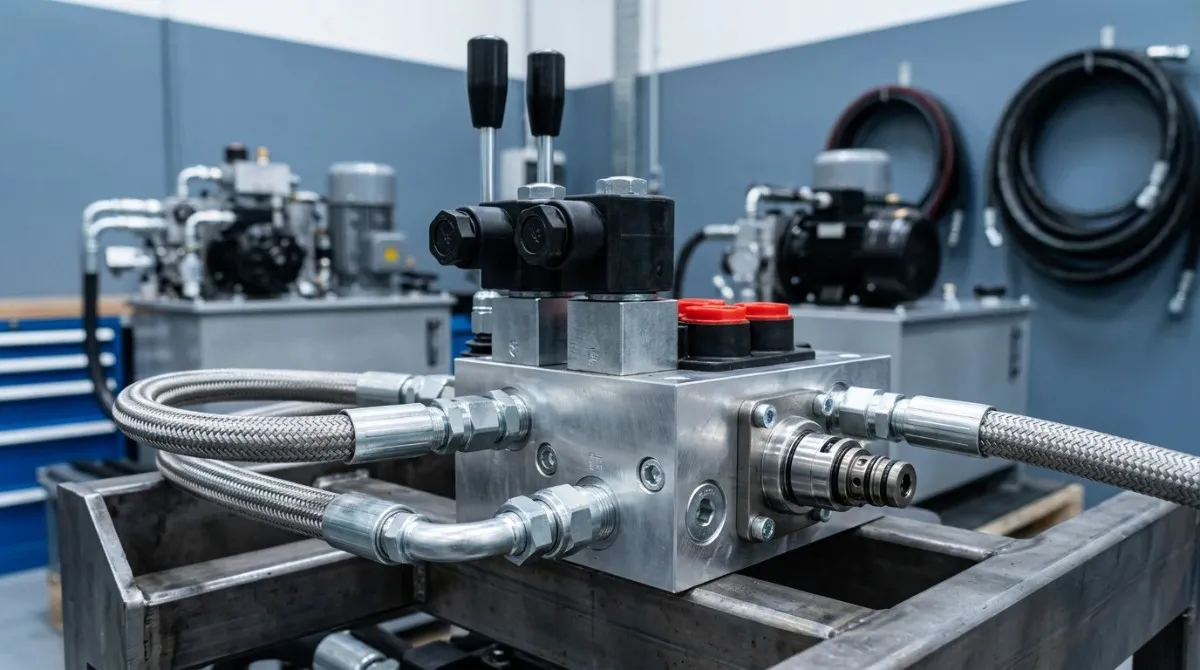
Precision fluid control is not an option in modern industrial machinery but rather a standard. This precision has been centred on the Hydraulic Solenoid Valve which translates electrical signals to regulated hydraulic flow. These valves regulate the flow, the prevention of flow, or the diversion of fluid over whole circuits, whether it be in the construction equipment and agricultural machinery or in the production process of presses or marine systems – they are essential to any high-pressure environment.
With the spread of automation in a variety of industries, there has been a boom in the need to have high-quality hydraulic manual types on high-speed changeovers. No longer are the procurement managers and design engineers asking about performance; they are examining lead times, compliance certifications, voltage compatibility and after-sales support. Knowing to choose and source the appropriate valve is critical in keeping the system running, managing expenses, and keeping the system safe.
Definition & How It Works
Hydraulic solenoid valve Hydraulic solenoid is an electromechanically operated product that regulates the Hydraulic fluid flow in a circuit. A magnetic field is produced in the solenoid coil when a current of electricity traverses the coil and it pulls a plunger or spool to open or close the valve port. The instant that the current is switched off, a spring restores the mechanism. This low-tech, high-performance Hydraulic Solenoid Valve working principle allows its actuation to occur instantly and repeatedly – even at pressure levels well above 350 bar.
Core Technical Specifications
Here are the specifications that you should keep in mind:
- Operating pressure: 50-350 bar typically, depending on the material of the body and the make of the body.
- Voltage compatibility: most of the systems operate with Hydraulic Solenoid Valve 24v DC when used in an industrial facility or Hydraulic Solenoid Valve 12v DC when used in mobile and vehicular connections.
- Coil rating: The Hydraulic Solenoid Valve coil defines the watt, heat tolerance, and protection (IP65 to IP67 typical) level.
- Response time: 20 to 100 milliseconds is a typical spool design.
- Port configuration: 2-port, 3-port or 4-port with respect to circuit topology.
- Seal material: NBR, Viton or PTFE – selected according to type of fluid and operating temperature.
- Materials of the body: ductile iron, carbon steel, or aluminium alloy.
Industrial Applications
Where high-force, automated fluid control is a necessity, a hydraulic solenoid valve will be used. Below is a table illustrating key industry-specific applications:
| Industry | Application |
|---|---|
| Construction & Mining | Excavator arm control, loader bucket tilt, drill rotation |
| Agriculture | Tractor hydraulic lift systems, sprayer valve control |
| Manufacturing & Press | Hydraulic press actuation, clamping systems, CNC machine tools |
| Material Handling | Forklift mast control, conveyor diverters, crane boom movement |
| Marine & Offshore | Deck crane circuits, steering gear, hatch cover systems |
| Oil & Gas | Pipeline diversion, wellhead BOP control, manifold switching |
| Automotive Assembly | Robotic welding arms, stamping press lines, paint booth systems |
Key Features & Benefits Types of Hydraulic Solenoid Valves
The choice of the right valve type involves discrimination of the Hydraulic Solenoid Valve types on the market and their functional peculiarities:
- 2-way hydraulic solenoid valve: There are 2 ports with 2 positions: fully open circuit or fully closed; this type of valve can be used in on/off flow circuits and block circuits.
- 3/2-Way Valve: Three ports with two positions – best when controlling a single-acting cylinder and pilot circuits.
- 4/2-Way Valve: The four ports have two positions – it drives double-acting cylinders in both the retract and extend directions.
- 4/3-Way Valve: Four ports, three positions – with one extra (open, closed, or tandem) centre position to control the motor and regen. circuits.
- Proportional Solenoid Valve: A Variable Electric signal corresponds to variable flow or pressure – crucial in closed-loop control systems.
- Carriage Valve: Screw-in Mounting, suitable to manifold: saves space and minimizes leak points within small hydraulic blocks.
Key Features & Benefits
Reliable design and function are fundamental attributes of hydraulic solenoid valves. However, in addition to mechanical operation, these valves represent an optimum design and application efficiency for contemporary hydraulic circuits. They provide fast switching, low power and compatibility with PLCs or other automatic controls. For systems that operate on a 100% duty cycle (i.e., production line or offshore platform), a valve's insulation class, and coil temperature will directly affect its service life. Such attributes are important for specifying the appropriate, not just the appropriate, price component.
Features to Specify
- IP65 or IP67 enclosure for wet or dusty conditions or for washdown conditions.
- Class H or Class F coil insulation (use in locations with high ambient temperature).
- Maintenance and emergency operation are manual overrides.
- Stainless steel corrosion-resistant plunger and spring: used in marine or chemical environments.
- Built-in pressure compensation of constant switching at the fluctuating inlet pressures.
- DIN connector standard 43650, to allow universal coil interchangeability.
Benefits for Buyers
- Minimises the complexity and installation time of automated systems wiring.
- Supports programmable operation and remote operation – vital in integration with Industry 4.0.
- Reduced maintenance costs relative to hand-worked or Pneumatic valve options.
- 4-circuit multi-circuit modular manifolds are available.
- A long life cycle (5-10 million cycles) lowers the overall cost of ownership.
The Selection of the Right Hydraulic Solenoid Valve
The selection of the right hydraulic solenoid valve involves these 8 key points:
- Set your operating pressure and flow rate – adjust valve Cv rating to actual system requirements.
- Select supply voltage – Select Hydraulic Solenoid Valve 24v when the panel has a DC supply and 12v DC when using battery-powered mobile devices.
- Select the appropriate port configuration – the 2-way hydraulic solenoid valve is appropriate to simple isolation and the 4/3-way reversible cylinder drives.
- State coil class and IP rating depending on type of environmental exposure – outdoor, washdown, or hazardous area sites require proper certification.
- Test seal compatibility with your hydraulic fluid of mineral, biodegradable fluid or of fire-resistant fluid; each type of different elastomer is needed.
- Evaluate the hydraulic solenoid valve price versus the total cost of ownership – a less expensive valve with a low MTBF makes the downtime cost much higher.
- Guarantee that the standards are adhered to – ISO 4401, CETOP, and NFPA mounting patterns make things interchangeable.
- Make sure of the availability of spare parts and the possibility to replace the coils of your preferred Hydraulic Solenoid Valve suppliers prior to final procurement.
Role of a Reliable Trader/Supplier in India
The benefits of sourcing via proven Hydraulic Solenoid Valve suppliers and Hydraulic Solenoid Valve exporters in India are immense – in terms of price competitiveness when buying in bulk quantities, shorter domestic lead times, invoicing which is GST compliant, and engineering assistance in site-specific customisation. The supplier has to be reliable enough to stock high-demand configurations, offer OEM-compliant coil replacements, issue dimensional data sheets and certificates upon request and offer after-sales troubleshooting services, all parameters that are important to the procurement manager in charge of high-availability operations.
About NTH
‘As an experienced company with a global reputation as a leader in providing advanced hydraulic solutions for modern manufacturing purposes, N.T. Associates has built its reputation through dedication to quality and innovation, which is reflected in our ability to supply reputable products and services in diverse industries, including those listed previously. Our many years of experience in providing specialty hydraulic hose pipes and precision-engineered components give us confidence that all our products will comply with the most stringent performance standards. N.T. Associates is a specialist in providing comprehensive solutions for hydraulic systems, including hydraulic pipes, hydraulic motors, hydraulic vane pumps, hydraulic power packs, etc. Our experience comes from working with customers—a step that allows us to better determine what our customers need and to provide them with customized solutions to improve their everyday productivity and efficiency levels. If you are seeking hydraulic hose pipes, hydraulic motors, hydraulic vane pumps, hydraulic power packs, or any other related hydraulic equipment to support your operations and achieve your business goals, N.T. Associates can provide that solution.'
Conclusion
One of the basic constituents of any automated fluid power system is the hydraulic solenoid valve. Choosing the right one, a Hydraulic Solenoid Valve type arrangement to use in a manufacturing press or a 12v one over a mobile crane, requires both the same consideration of technical aspects and reliability related to the supply chain. Knowing the Hydraulic Solenoid Valve working principle will mean when engineers make specifications, they will be sure that the specifications will work, whereas a comparative price against lifecycle costs will determine that procurement really delivers.
As a bulk buyer or dealer or an OEM integrator, collaborating with certified Hydraulic Solenoid Valve manufacturers and Hydraulic Solenoid Valve exporters in India would provide you with competitive prices, certified products and responsive technical support. Assess your vendors not only by unit price but also in terms of capability to provide steady quality service, extreme supply swell, and sustainability to your business, as in hydraulics, downtime is never an option.
Contact us for more information.
A hydraulic solenoid valve is an electromechanical device used to control the flow and direction of hydraulic fluid in a system using an electrical signal.
When electrical current energises the solenoid coil, a magnetic field moves the valve spool or plunger, opening or closing fluid passages to regulate hydraulic flow.
Common Hydraulic Solenoid Valve types include 2/2-way, 3/2-way, 4/2-way, 4/3-way, proportional valves, and cartridge valves.
Hydraulic Solenoid Valve 12v models are commonly used in mobile and battery-operated equipment, while Hydraulic Solenoid Valve 24v valves are preferred in industrial automation and factory systems.
These valves are widely used in construction, agriculture, manufacturing, marine, oil & gas, automotive assembly, and material handling industries.
Most hydraulic solenoid valves operate within a pressure range of 50–350 bar, depending on the valve design and material.