

How Does a Vane Pump Work? Variable Vane Pump Benefits in Industry 4.0
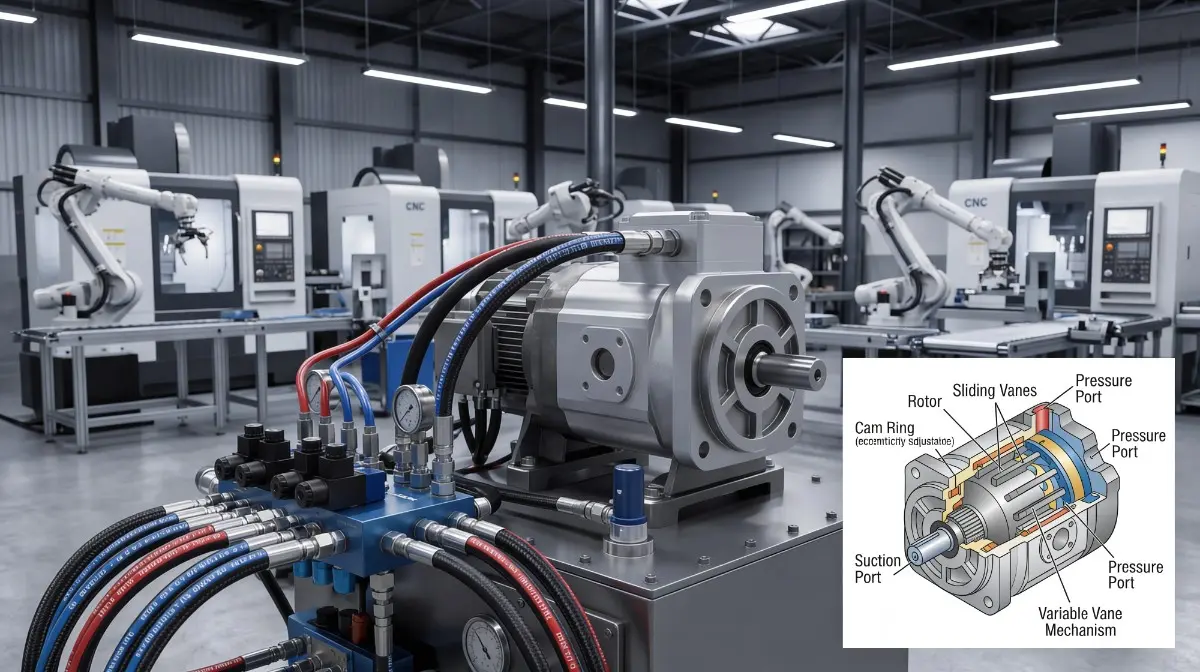
Smart factories depend on automated machine systems in modern manufacturing industries to increase the performance and efficiency of the product. Your machine needs good hydraulic pumps like variable vane pumps, which help you to grow your business. 4.0 industries need heavy hydraulic systems that are reliable and able to handle the pressure with the requirements. That's why variable vane pumps are perfectly fit for this because they are designed to provide smooth, adjustable pressure with energy efficiency.
How does a vane pump work?
A Vane Pump operates a system using a rotor mounted in an internal cam-shaped housing. Multiple sliding vanes Increase outward from the rotor slots and maintain contact with the inner surface of the housing as the rotor spins. In this process, the vibration is less, and the noise is minimal, while other hydraulic pumps produce huge noise and vibrations.
What Makes Variable Vane Pumps Different?
Variable vane pumps are different from other hydraulic pumps because they can automatically adjust to the requirements and demands. This is where the variable displacement vane pump working principle becomes valuable. That means the variable vane pumps help to reduce the energy cost and provide good performance with efficiency.
Why Flexible Hydraulic Systems Are Essential for Industry 4.0
To start digital technology, automation, and making data-driven decisions in manufacturing processes, hydraulic systems must meet several key requirements:
- High efficiency
- Precise flow control
- Reduced energy consumption
- Reliable performance under variable loads
- Integration with automated machinery
Variable vane pumps are good in these areas because they respond actively to pressure demands instead of running continuously at full capacity. To understand how hydraulic components contribute to advanced automation, you may also explore this related topic:
How Hydraulic Variable Vane Pumps Work in Industrial Automation
Trivia
Industry 4.0 factories often combine hydraulics, sensors, and digital monitoring to track pump performance in real time.
Key Advantages of Variable Vane Pumps in Automated Manufacturing
In automation manufacturing, there are 3 advantages of variable vane pumps.
1. Low power consumption
In automated factories, machines rarely operate at full load continuously. Variable vane pumps reduce energy consumption by adjusting displacement according to system pressure. The pump automatically reduces the outflow when the hydraulic pump requires less power. This helps to reduce cost over time.
2. Smooth and Quiet Operation
Now facilities are rapidly increasing the workplace safety and reducing the noise levels. Variable vane pumps allow smoother movements compared to the other hydraulic pumps. Vane pumps slide slowly against the surface in the cam ring; this provides less noise and vibration. This makes them reliable in the market.
3. Enhanced Equipment Durability
Pressure variations and mechanical stress cause damage to hydraulic systems. Variable vane pumps stabilize and maintain the hydraulic pressure and decrease stress, and they also help to increase the life span of systems.
Trivia
Hydraulic pumps are used not only in factories but also in construction equipment, aircraft systems, and even marine machinery.
Comparison of Pump Types in Automated Systems
Here are the comparisons between the automated system pumps and know the features and others.
| Feature | Fixed Displacement Pumps | Variable Vane Pumps |
|---|---|---|
| Flow Control | Constant flow | Adjustable flow |
| Energy Efficiency | Lower | Higher |
| Noise Levels | Moderate to High | Low |
| Adaptability | Limited | Excellent |
| Automation Compatibility | Moderate | Ideal |
The flexibility of variable vane pumps makes them better suited for modern automated machinery where production requirements change frequently.
Cost Considerations in Industrial Applications
When businesses procure the hydraulic equipment, they often consider initial investment instead of long-term benefits. The variable vane pump price sometimes may be higher than basic hydraulic pumps, but vane pumps have improved the performance and reduced the energy cost in the long term. Also, the vane pumps adjust the pressure with the demand; they don't give the unnecessary power to the machines. With minimal maintenance you can easily increase the life span of the pumps. That's why variable vane pumps are the smart investment for modern automations.
The Growing Role of Vane Pumps in Industry 4.0 Equipment
Many automated machines in Industry 4.0 are assisted by hydraulic pumps. Some machines are mentioned below:
- CNC machines
- Injection molding systems
- Robotic assembly lines
- Metal forming equipment
- Packaging automation systems
In these systems, the vane pump plays an important role because it provides consistent pressure and smooth fluid flow. Another advantage is pumps respond quickly and change the loads easily.
Advanced Control Through the Variable Displacement Principle
Automation systems commonly depend on sensors and controllers to manage hydraulic pressure and flow. This is where the variable displacement vane pump working principle becomes especially valuable. By automatically adjusting displacement, the pump can maintain consistent pressure levels even when machine loads change. This gives hydraulic cylinders and motors a stable operation, which is used in robotic manufacturing systems.
Trivia
Variable vane pumps can automatically adjust their output, meaning they only work as hard as needed—kind of like cruise control for hydraulic systems.
Conclusion:
Industry 4.0 has developed the way of operations in factories, placing good automation, efficiency, and intelligent systems. Vane pumps are adaptable, reliable, and energy efficient. Vane pumps are very helpful in the long term, but also, variable vane pump prices do not affect you in the long term. If you are thinking of sourcing the hydraulic system vane pumps and other related stuff, you are at the best place because NTH gives the best solution for your industries.
FAQs
1. What is a hydraulic variable vane pump and why is it used in modern manufacturing?
Ans: A hydraulic variable vane pump is a type of pump that adjusts its fluid output based on system pressure requirements. This makes it highly efficient for automated manufacturing systems where workloads change frequently. It ensures smooth hydraulic flow, reduces energy waste, and supports precision operations. Because of these advantages, many Industry 4.0 factories use variable vane pumps to maintain consistent performance and improve overall machine efficiency.
2. How does a vane pump maintain consistent hydraulic pressure in automated systems?
Ans: A vane pump uses rotating vanes inside a cam-shaped housing to move hydraulic fluid. As the rotor spins, chambers expand and contract, pulling fluid in and pushing it out. This process creates steady pressure and smooth flow. In automated systems, this consistent pressure helps machines operate accurately, especially in applications like injection molding, robotics, and CNC equipment where stable hydraulic performance is critical.
3. What factors influence the variable vane pump price in industrial markets?
Ans: The price of a variable vane pump depends on several factors, such as pump capacity, pressure rating, material quality, and manufacturer reputation. Pumps designed for heavy-duty industrial use often cost more because they are built to handle continuous operation. However, many manufacturers consider them a worthwhile investment because their energy efficiency and long service life help reduce operating and maintenance costs over time.
4. Why are variable vane pumps considered energy-efficient for Industry 4.0 factories?
Ans: Variable vane pumps adjust their displacement automatically according to system demand. Instead of running at full capacity all the time, they reduce flow when pressure requirements are lower. This prevents unnecessary energy consumption and reduces load on hydraulic components. In Industry 4.0 environments where machines operate at different speeds and cycles, this adaptability helps factories lower electricity usage and improve overall operational efficiency.
5. As a buyer, how do I know if a variable vane pump is the right choice for my plant?
Ans: If your facility operates automated machinery or equipment with changing hydraulic loads, a variable vane pump is often a suitable choice. Buyers usually evaluate factors such as required pressure, machine compatibility, energy efficiency, and long-term reliability. Consulting an experienced hydraulic supplier can help determine the correct pump capacity and design so that the system performs efficiently without unnecessary operating costs.
6. From an industry user’s experience, what benefits do companies notice after upgrading to variable vane pumps?
Ans: Many companies report smoother machine operation, lower energy bills, and reduced hydraulic noise after upgrading to variable vane pumps. Maintenance teams also notice fewer pressure fluctuations and less wear on hydraulic components. Over time, these improvements lead to longer equipment life and higher productivity. For manufacturers running automated production lines, this upgrade often results in more stable and efficient plant operations.